Healthy Lifestyle for Kids: Practical Tips for Everyday Life

A healthy lifestyle is essential for children’s development. For this, sufficient physical activity and proper nutrients are necessary.


1. Healthy Breakfasts and Meals

Breakfast is the most important meal of the day. It gives children the energy they need. In today’s fast-paced world, it is worth looking for quick and healthy recipes.

Tips for everyday routines:

  • Whole grains: Oatmeal, whole wheat bread, or muesli provide long-lasting energy.
  • Fresh fruits and vegetables: Apples, bananas, berries, cucumbers, or bell peppers — they are full of vitamins.
  • Simple protein sources: Eggs, yogurt, cheese, chicken breast ham.

I shared some recipe ideas in one of my previous blog posts: https://letsgonatasa.com/5-healthy-and-easy-breakfasts-for-kids/


2. Daily Physical Activity

It is good for children to spend a lot of time outdoors and to be active. They have much more energy than adults, so it is often difficult to keep up with them. Still, it is worth incorporating physical activity into everyday life, even a walk in the park, cycling, or visiting the playground. We often coordinate with the mothers of my daughter’s friends so that we all go out together. During this time, the children run and play together, and we don’t get bored either because there is someone to talk to. Even walking or cycling to school or kindergarten with your child counts as good exercise.


3. Hydration

It is often difficult to get children to drink water. At least in our case, it is quite challenging, so we often solve sufficient hydration in a playful way. We compete to see who drinks their glass of water first. Of course, this is done slowly to avoid choking. When I drink, I also pour half a glass of water for my child, and we sip it together.

Tips:

  • Amount: Younger children should drink 5–6 glasses per day, older children 7–8 glasses.
  • Avoid sugary drinks: They can damage children’s teeth, and if they always receive soda, they won’t appreciate water as much, and it may fill them up.
  • Motivation: Colorful cups, fun straws, or personal water bottles can encourage regular drinking.

4. Rest and Sleep

Adequate sleep is essential for physical development, attention, mood, and the immune system.

Tips:

  • Sleep needs: Toddlers need 10–12 hours, school-aged children 9–11 hours of sleep.
  • Evening routine: It is easier to maintain the usual routine, so the child knows what to expect. In our case: after dinner, about fifteen minutes of TV, then we go for a bath. After bathing, a little shared play and conversation, then bedtime story (from a book) and sleep.
  • Screen-free time: Before going to bed, we avoid screens. In our household, there are no screens 1–1.5 hours before sleep.

5. Simple Healthy Habits

Everyday small habits shape children’s lives and form the foundation for a healthy lifestyle in the long term.

Tips:

  • Hygiene: Wash hands before and after meals, brush teeth in the morning and evening.
  • Tidying up: Involve children in putting away their toys — it develops responsibility and organizational skills. In our case, this works best as a game. We compete: while I wash the dishes, can my child clean up their toys in the same time? This way, we avoid arguments.
  • Independence: Give small tasks (for example, pouring water, cutting fruit) to increase their confidence and skills.

6. Vitamins

I would not call this mandatory, but if we feel the child does not get enough vitamins from food, we can supplement.

Omega-3 fatty acids: Important for brain development and heart health. They support learning and memory functions.

Vitamin C: Strengthens the immune system. Very helpful during cold weather and at the beginning of school/kindergarten.

Vitamin D: Helps with calcium absorption, which is essential for the health of bones and teeth.

Advertisement
Why Music and Movement Are Important for Development
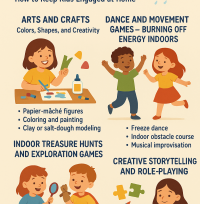
If there’s something that can both entertain and help kids grow, it’s music and movement. It’s not just play – it’s actually an amazing tool for little brains to develop. When kids jump, clap, dance, or simply move to the rhythm, different parts of their brain work together: movement, speech, and thinking all get activated. And the really wonderful part is that they do all this while having a blast – learning and having fun at the same time, without even realizing it. Movement Every Day Movement is essential in a child’s life. Big movements – running, jumping, spinning – and fine movements – like hand gestures or handling objects – are both important. These skills aren’t just useful for sports, but also for everyday activities like dressing, eating, playing with toys, and later on, for sports and creative activities. It’s easy to bring movement into your home. For example, we often set up a mini obstacle course in the living room: jumping between cushions, rolling on the carpet, climbing on the couch (safely, of course!). We also do simple exercises at home together: arm circles, squats, jumps. First, I come up with the exercises, then she does too. She loves inventing her own moves, and when I try to copy her, she often laughs – it makes the exercise really fun. And honestly, it’s a great way for me to get a little exercise too. Rhythm and Focus Developing a sense of rhythm is super important – it teaches kids to notice patterns in time and follow sequences. Home ideas: Clap-along game: Play a favorite children’s song and clap along to the rhythm. Later, you can create your own dance moves together. Trying instruments: Drums, shakers, xylophones – the more you try, the more fun it is. The child gets to explore a variety of sounds. At our house, the flute and drumming on different objects are always a hit. Combine movement and rhythm: Assign a movement to each beat – clap, tap, stomp – so the child both sees and hears the rhythm. A few more tips for home: Learn short songs and repeat them with movements. At our home, many of the songs she learns at preschool include actions, and she loves teaching them to us – so we get another fun, active activity together. The most important thing is to keep it playful and joyful. Kids learn best through play, and when music and movement are part of the fun, they’re learning without even realizing it.
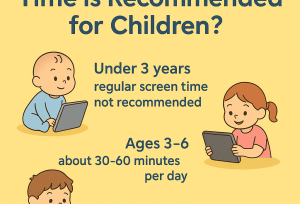
How Much Screen Time Is Recommended for Children?
These days, it’s almost impossible to avoid screens — tablets, phones, and computers are everywhere. I often get questions from parents (and ask them myself too): How much screen time is okay for kids? How do we find that balance where it’s not harmful, but maybe even useful? Why Screen Time Needs Balance A child’s attention, imagination, and development all depend on what fills their days. And while digital games can sometimes get a bad reputation, they can actually be great — if used wisely. Many of them help develop logic, memory, and problem-solving skills. Still, it’s important to remember that nothing replaces outdoor play, real movement, and time spent with family. I always try to make sure screens don’t steal the time we could spend drawing, baking, or playing hide and seek. It also matters what children watch or play. On my website, I share some educational and age-appropriate games that can be enjoyed safely. It’s worth finding platforms designed for kids — this way, you don’t have to constantly check over their shoulder to see what’s on the screen. How Much Screen Time is OK? Of course, every child is different, but here are some general guidelines that have worked for us: Under 3 years: Very little screen time, and only together — maybe a short cartoon or story before bed. Ages 3–6: Around 30–60 minutes a day, ideally broken into small chunks. Ages 6–12: Up to 1–2 hours, balanced with active play and outdoor time. These aren’t strict rules, just helpful reference points. Honestly, it’s nearly impossible to follow them perfectly every day — and that’s okay. What really matters is that screens don’t replace play, learning, or family time. Making Screen Time More Meaningful Instead of banning screens completely, we can turn them into something positive. Here are a few ideas that work well for us: Choose calm, age-appropriate stories instead of loud or overstimulating shows. Play or watch together. It’s more fun and gives you something to talk about afterward. Discuss what they’ve seen. Ask questions like “What did you like about that?” or “What do you think will happen next time?” Set clear routines. At our home, screen time comes after dinner and bath — about 20 minutes of cartoons before bedtime. It makes things predictable, and there’s no arguing about when it’s allowed. In Summary Screens are part of modern life, and that’s okay. The goal isn’t to ban them, but to use them thoughtfully. With moderation and a bit of planning, screen time can be educational, fun, and even bonding. When we pay attention to how much time kids spend — and what kind of content they see — screens can complement, not replace, the real joys of childhood: play, imagination, and time together.
How to Make Kindergarten Settling Easier
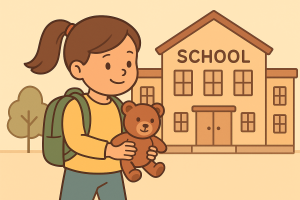
Starting kindergarten is an exciting time for every child and parent. It’s a new place, with unfamiliar teachers, and it’s normal for parents to feel a bit uncertain and find it hard to let go. However, from my own experience, it’s much easier for the child if the mom who takes them stays positive and cheerful when dropping them off, and doesn’t start crying along with them (I know, it’s hard!). This small thing makes a huge difference during those first few days. Your child is in good hands at kindergarten, and it’s truly beneficial for them — they gain so many new experiences, make friends, and learn things they’ll proudly show at home later.Before kindergarten started, we began giving our daughter vitamin C for a few weeks to help strengthen her immune system. It really helped us get through the first months more easily, when kids tend to catch small infections more often. 1. Preparing at Home Start by introducing what kindergarten will be like in a playful way. Talk about the teachers, the toys, and the new friends they’ll meet.You can even practice a “kindergarten day” at home — greetings, playtime, singing rhymes — it helps the child know what to expect. If kindergarten starts earlier than usual, try waking your child a little earlier a few days before, so they can get used to the new morning routine. 2. Gradual Adaptation There’s no need for your child to spend full days right away. It’s better to start with shorter visits and slowly increase the time they spend there.If your child can bring a favorite plush toy or comfort item from home, it can really help them feel safe and secure — especially during nap time. 3. Positive Goodbyes Saying goodbye is often the hardest part. It’s so important for moms or dads to stay calm, smile, and encourage their child when they go in.During the first few days, my daughter’s dad was the one who took her because he’s more confident and less emotional — and thankfully, she adapted quite quickly.Don’t panic if your child cries when you leave. I know it’s hard to walk away like that, but it’s a natural reaction — and usually, they calm down within minutes once they’re inside with the group. 4. Communication with the Kindergarten Most kindergartens have an open day before the year starts, where parents and children can meet the teachers and other families.It’s good to speak openly with the teachers — share your child’s eating or sleeping habits, or any fears they might have.Usually, there’s also a parent meeting during the first week, where they explain the weekly schedule and the upcoming activities for the year. 5. Play and Making Friends Play is one of the best ways for children to adjust and make friends. Group games reduce anxiety and help develop social skills.At home, you can play simple role-playing games that teach social rules or conflict resolution.And don’t forget to praise your child for every little success — whether it’s making a new friend or joining in a group activity.Our daughter loves to come home and recite the rhymes and poems she’s learned at kindergarten — it’s always the highlight of our evenings! 6. Patience Every child adjusts differently to new environments. Avoid comparing them to others, and watch for signs — if your child cries too much, becomes withdrawn, or has trouble sleeping, they might just need a bit more time.A predictable daily routine at home helps them feel safe and grounded.Our mornings can be challenging — she often doesn’t feel like getting dressed or brushing her teeth — but turning it into a game or race works wonders. We compete to see who gets to the bathroom or gets dressed faster. It’s much easier than nagging or arguing, and it starts the day on a happy note. Summary Starting kindergarten is a big milestone for every family. Gradual adaptation, comfort items from home, play, open communication with teachers, patience, praise, and lots of talking all help make the transition smoother.From experience, I can say that it’s so much easier for the child when the parent is calm, confident, and cheerful at drop-off. With a little positivity and consistency, your child will soon feel happy and safe at kindergarten — and you’ll both enjoy this new chapter together.    
DIY Play-Doh and Creative Crafts for Kids
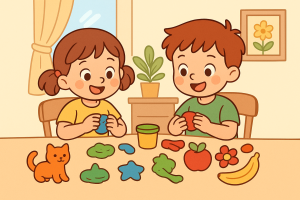
Encouraging kids to explore their creativity is always exciting, and Play-Doh (or any modeling clay) is one of the best tools for that. Playing with clay is not only fun, but it also helps develop fine motor skills, color recognition, and imagination. In this post, you’ll find plenty of simple ideas for making Play-Doh figures together, as well as other creative crafts at home. At the end, there’s even an easy homemade Play-Doh recipe! Why Play-Doh is great for kids Playing with clay has many benefits: Fine motor skills: Little fingers get stronger and more dexterous while shaping and molding. Color recognition: Using different colors helps kids learn them and see how they mix. (In our case, every batch usually ends up as one big brown blob because our little one loves mixing all the colors together!) Imagination and creativity: They can make animals, fruits, or favorite characters and invent their own stories around them. Learning through play: Kids can count, sort by color, shape, or size, all while having fun. Simple Play-Doh figures to start with If you’re just beginning, it’s best to start with easy figures: AnimalsTry small animals like a worm or snail at first. With simple templates and a little parental help, almost anything can be made.Use different colors to separate body parts.These figures are perfect for storytelling, letting kids invent their own little animal adventures. Fruits and vegetablesMake apples, bananas, carrots, or broccoli.Talk about colors, sizes, and shapes while shaping them.This is a playful way for kids to learn about healthy foods. Favorite charactersCreate figures from popular cartoons or shows, like Masha or SpongeBob (there’s even a video tutorial on the site).Kids love making their own versions of their favorite characters.These figures are great for pretend play or just creative fun. Creative crafts at home You can combine Play-Doh activities with other crafts: Mini worldsBuild a zoo, garden, or seaside scene for your figures.Use cardboard, paper, ribbons, or buttons for decoration. Lego pieces work too if you don’t mind mixing toys. Decoration and creative extrasOnce the figures are done, decorate them with paper, ribbons, or small craft materials.Kids can experiment with colors and textures, which boosts their creativity even more. Learning through playCount the figures together or group them by color, shape, or size.It’s a fun way to introduce basic math and logic skills. How to make Play-Doh even more fun Challenges and competitions: Who can make a figure the fastest or most creatively? Themed days: Animal day, fruit day, or favorite character day. Family involvement: Parents can join in, making it a shared experience. Photography and video: Take photos or record videos of the creations—it can motivate kids even more. Tips for parents Safety: Make sure kids don’t put the clay in their mouths. Easy cleanup: Use a tray or mat to keep the play area tidy. Extra fun: If you have Play-Doh sets that come with molds and accessories, the play becomes even more engaging. We have an edible cookie monster figure (check the videos), and when other kids visit, this usually keeps them busy. They get to be creative and “feed” the monster together. Homemade Play-Doh recipe (4 ingredients) 250 g flour 130 g salt 1 tablespoon oil 300 ml water Mix the ingredients and cook while stirring continuously. Don’t worry if it seems sticky or lumpy at first—once it cools and you knead it, the texture will be perfect. Divide into 4 portions and add food coloring, cocoa powder (for brown), or turmeric (for yellow) while kneading. Once completely cooled, it won’t stick to the kids’ hands. Wearing gloves during coloring is recommended.
From Kindergarten to School: How to Make the Transition Easier for Children
From Kindergarten to School Starting school is a huge milestone in every child’s life – and let’s be honest, for us parents too. We often feel just as nervous as they do: proud, emotional, and maybe a little anxious. We want them to feel happy, to make friends, to enjoy going to school every single day. But don’t worry – with a bit of patience, attention, and lots of love, this transition can become a truly beautiful experience for both of you. 🌱 Why Can This Period Be Challenging? Kindergarten is a warm, playful, and familiar world. Children get used to their group room, the teachers, and their friends.School, on the other hand, is a bit more structured: there are more rules, lessons require longer attention, and everything feels new. For some children, this change can bring anxiety, tiredness, or shyness. That’s why it’s so important for parents to stay patient and avoid rushing the adjustment process. Every child has their own rhythm – it’s worth respecting that. 💬 How Can You Help Your Child Prepare? 1. Talk a Lot About School Tell them what a school day will look like, what they’ll learn, and who their teachers might be. You can read picture books or watch short stories about starting school together.Sharing your own school memories – funny or touching moments – helps them understand that everyone feels a little nervous at first. 2. Get Used to the New Routine Gradually A few weeks before school starts, begin practicing morning routines and waking up a bit earlier.You can also support focus through short, calm activities at home like drawing together, watching a story, or playing a board game.A predictable daily rhythm helps children feel safe and confident. 3. Encourage Independence Practice packing the school bag together, getting dressed, or washing up.Give them small choices like: “Which snack would you like to take today?”These little moments of success build confidence and make new challenges feel less scary. 4. Get to Know the School If possible, visit the school before the first day. It helps so much if your child has already seen the classroom, met the teacher, or recognized a few future classmates.Open days and meet-the-teacher events are wonderful opportunities for this. 5. Support Friendships If your child already knows one or two classmates, walking into school will be much easier.Before the school year starts, try to arrange playdates or playground meetups.Familiar faces always make the first days feel safer. 💖 The Parent’s Role in the First Weeks The most important thing is that your child feels you believe in them.When you stay calm and speak positively about school, they’ll feel that same confidence. Ask each day how they felt, what they enjoyed, and what was hard.Even if they don’t talk much, knowing that you’re there to listen makes a huge difference. Having a regular routine also helps a lot – especially in those first, more tiring weeks.Patience and understanding are truly the greatest gifts you can give your child right now. 🏫 How Can the School Help? Many schools today pay special attention to making the first days easier.Some organize playful welcome activities, others use a “buddy system” so that younger children feel supported by older ones.It’s worth asking about these programs – they can make the transition much smoother. 🌈 In Summary Starting school is a new chapter not only for your child but for you as a parent as well.It’s perfectly normal to feel a mix of emotions – joy, excitement, and worry all at once.But with love, patience, and trust, the beginning of school can become a truly happy and memorable time for both of you. The most important thing your child needs to know is this:👉 They’re not alone — you’re there, and you believe in them.
The Benefits of Educational Games for Preschoolers and Young Schoolchildren
Children are naturally curious — they want to explore, try new things, and discover the world around them. As parents, we often look for ways to keep them engaged and support their development. Educational games are perfect for this: they teach important skills through play while making learning enjoyable. Why Educational Games Work Kids learn best when they’re having fun. Educational games turn learning from a chore into a playful experience. They can help children: improve focus and concentration strengthen logical thinking and problem-solving skills develop language and communication practice numbers and letters in a fun, interactive way Examples of How Games Teach Educational games come in many forms. Some simple, effective examples include: Tracing ABCs and numbers with a finger: Helps kids practice letter and number shapes, improves fine motor skills, and lays the groundwork for handwriting. Letter ordering games: Kids put scrambled letters in the correct order, building logic and language skills. Puzzles: Develop spatial awareness, perseverance, and problem-solving. Tic Tac Toe: Teaches strategic thinking and planning ahead — all with very simple rules. What Skills Do They Develop? For preschoolers: Recognizing colors, shapes, letters, and numbers, along with hand-eye coordination. For young schoolchildren: Focus, memory, problem-solving, language skills, and logical thinking. Conclusion Educational games aren’t just fun — they give children confidence in school-related skills. Whether it’s practicing letters and numbers, solving a puzzle, or learning to think strategically, every game is a small step in learning. And the best part? Kids often don’t even realize they’re learning because they’re having such a good time.
How to Choose Useful Online Games for Kids
Screens and the digital world are now part of everyday life — for us and for our kids too. Online games can be a lot of fun, and some of them even help children learn new skills. But with so many options out there, it’s not always easy to know which ones are really worth their time. Here are a few tips to help you choose games that are not only entertaining but also help your child’s development. 1. Keep It Simple The best games are easy to understand and play. When a child can quickly figure out how a game works, they feel confident and enjoy it more. Simple rules mean less frustration — and more fun. 2. Match the Game to Their Age Always check if a game suits your child’s age group. For preschoolers, look for games that focus on colors, shapes, and basic logic. For school-aged children, memory games, puzzles, and problem-solving challenges are great choices. Choosing age-appropriate content keeps kids engaged and helps them learn at the right pace. 3. Look for Learning Benefits The most valuable games are those that teach while they entertain.Try to find ones that help with: recognizing colors and shapes, counting and basic math, building memory and attention, improving logical thinking. A little learning hidden inside the fun is the perfect mix. 4. Short and Sweet Playtime Good games don’t have to last long. The best ones are enjoyable even in short bursts — five or ten minutes can be enough. That makes it easier to manage screen time, and your child can always come back later to play again without losing progress. 5. Play Together When You Can Some of the nicest moments happen when you join in. Even just a few minutes of shared play can make a difference. Kids love it when parents show interest in what they’re doing — it turns screen time into quality time.
The Easiest and Most Fun Ways to Learn Colors!
Colors surround us every day, and for kids, the best way to explore them is through playful learning. Getting to know colors isn’t just fun—it also helps develop attention, focus, and creativity. In this post, we’ve gathered some super simple and fun activities that you can easily do at home. Color Sorting Game Let’s start with a classic but always effective game: sorting objects by color! Gather all kinds of little things from around the house—Legos, bottle caps, plush toys, hair clips—and let’s “colorize” together. The task is simple: “Put the red ones here, the blue ones there!” While playing, kids not only learn colors but also practice organizing, noticing details, and paying attention. This game is perfect for color recognition, fine motor skills, and creating quality parent-child moments. Color Hunt Around the House If a lazy afternoon feels a little boring, a color hunt can bring it to life! You can say: “Come on, let’s find something yellow!”—and your child will happily run to find it. “Got it! The pillow is yellow!”—they’ll proudly show you. It’s simple, yet full of movement, learning, and laughter. Add a little music, and it gets even more exciting: when the music stops, they have to find a new color. This game is not only fun but also helps develop focus and reaction time. Colorful Snack Time Colors aren’t just for play—they can also brighten up snack time! A little red apple, orange carrot, green cucumber—and suddenly your plate is a rainbow. While eating together, talk about the colors: “What color is this pepper?” — “Red!” — they’ll say proudly, smiling. Mealtime becomes not only tasty but also a moment for learning and quality bonding. Playing with Colored Clay Clay is pure magic! Little hands work, minds think, and kids learn what red, blue, and yellow are. For us, clay time is always a mini adventure: “Let’s make a blue fish, a red apple, a green snake!” And when we mix two colors, surprise! “Look, Mom, it turned orange!” Those moments are priceless   Rainbow Painting and Drawing This is one of our favorites! There’s nothing more joyful than painting a big rainbow together. All you need are some colored pencils, watercolor paints, or crayons, and the magic begins. Draw clouds, sun, raindrops, and name the colors as you go: “Here comes the red stripe, then orange, then yellow…” Kids love seeing the colors come alive and learn the order of the rainbow at the same time. Mixing Colors Once kids know the basic colors, try mixing them to discover new shades! For example: red + yellow = orange, blue + yellow = green. This is not only educational but also an exciting experiment for little explorers. Colorful Walks and Discoveries Beyond indoor play, you can turn walks into a color-learning adventure too. Point out colors on plants, flowers, and objects, and ask your child to name them. This helps develop observation skills, vocabulary, and speech while combining movement and fresh air for a healthy and happy experience. Tips for Playful Color Learnin•Repetition: Kids learn more easily when they encounter the same color multiple times.• Everyday connection: Colors in clothes, toys, and food help reinforce learning.• Praise: Little compliments motivate children and boost their confidence.• Creative challenges: Drawing, painting, and clay play with different colors make learning fun!